End of tenancy is when most surface damage becomes visible — and when the pressure to turn the property around quickly makes every decision feel rushed. This guide is for landlords and letting agents who want to handle surface repairs professionally, cost-effectively, and without unnecessary delays between tenancies.
The Most Common End of Tenancy Surface Damage
After hundreds of end-of-tenancy jobs across Surrey, London, Sussex, Kent, Hampshire and Berkshire, here's what we see most often:
- Kitchen worktop chips and burns — heat damage near the hob, knife cuts near the sink, edge chips from dropped items
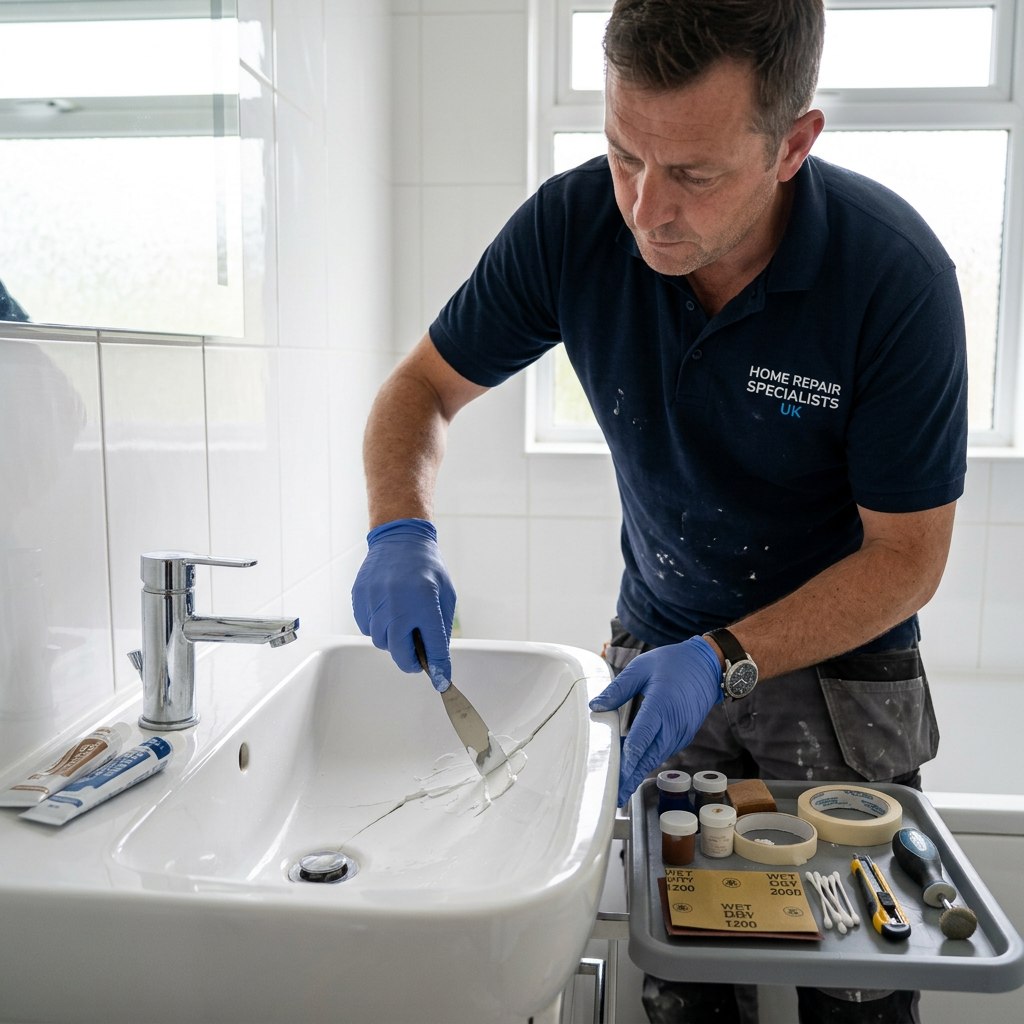
- Bath and basin chips — usually from dropped toiletry bottles or DIY repairs that weren't done professionally
- Door frame and skirting scuffs — from furniture being moved in and out
- Scratched or scuffed wooden floors — particularly in hallways and living rooms
- Chipped ceramic tiles — in bathrooms and kitchens, usually from impact
- Scratched or damaged UPVC window frames and sills
The good news is that all of these are repairable — often to a standard that's invisible to a prospective tenant viewing the property.
Repair vs Replace: The Financial Case
The instinct at end of tenancy is often to replace damaged items — particularly if the worktop or bath looks bad. But the numbers rarely stack up in favour of replacement.
A chipped kitchen worktop costs £80–£150 to repair professionally. A worktop replacement — materials, fitting, any tiling or adjustment work — typically costs £400–£1,200 depending on size and material. The repair produces a result that's invisible in normal use and photographs well for listings.
Similarly, a chipped bath or basin costs £80–£200 to repair. A replacement suite — unit, fitting, any associated plumbing — costs £500–£2,000 or more.
The Deposit Dispute Problem
Surface damage at end of tenancy regularly ends up in deposit disputes — either because the landlord can't justify the cost of a full replacement (which the adjudicator may reduce), or because the damage wasn't documented properly at check-in.
Professional repair solves both problems. The repair cost is straightforward to justify and document, the amount is proportionate to the damage, and the result is a restored property rather than a dispute about betterment.
We can provide a written quotation before work begins and a completion report afterwards — documentation that's useful if you do need to make a deposit claim.
Turnaround Time
We understand that turnaround time between tenancies is critical. Most end-of-tenancy surface repair jobs can be completed in a single visit, typically within two to three days of booking. For larger portfolios with multiple properties, we can schedule batch visits to minimise cost and disruption.
Multi-Property Landlords
If you manage a portfolio of properties, regular surface maintenance between tenancies is significantly cheaper than addressing accumulated damage at the end of a longer tenancy. Small chips and scratches repaired promptly cost a fraction of what they cost to repair after years of further wear around the original damage.
We work with several letting agents and property management companies across the South East on retained maintenance arrangements — contact us to discuss what that might look like for your portfolio.
Get a quote for your end-of-tenancy repairs — fast turnaround, professional finish, competitive pricing.
Surface Repair Group — professional surface repairs across Surrey, London, Sussex, Kent, Hampshire and Berkshire. Visit surfacerepairgroup.co.uk.